
TL;DR
- PTZ cameras are best for medium and large conference rooms where speakers move around or presentations are common.
- Fixed cameras work well in small meeting rooms because they provide a stable wide-angle view with minimal setup.
- A 4K conference room camera delivers sharper video quality, making remote meetings more engaging regardless of camera type.
- The right camera for meeting room depends on room size, participant count, and how your meetings are conducted.
- Planning for future growth helps you choose a solution that remains useful as your workplace evolves.
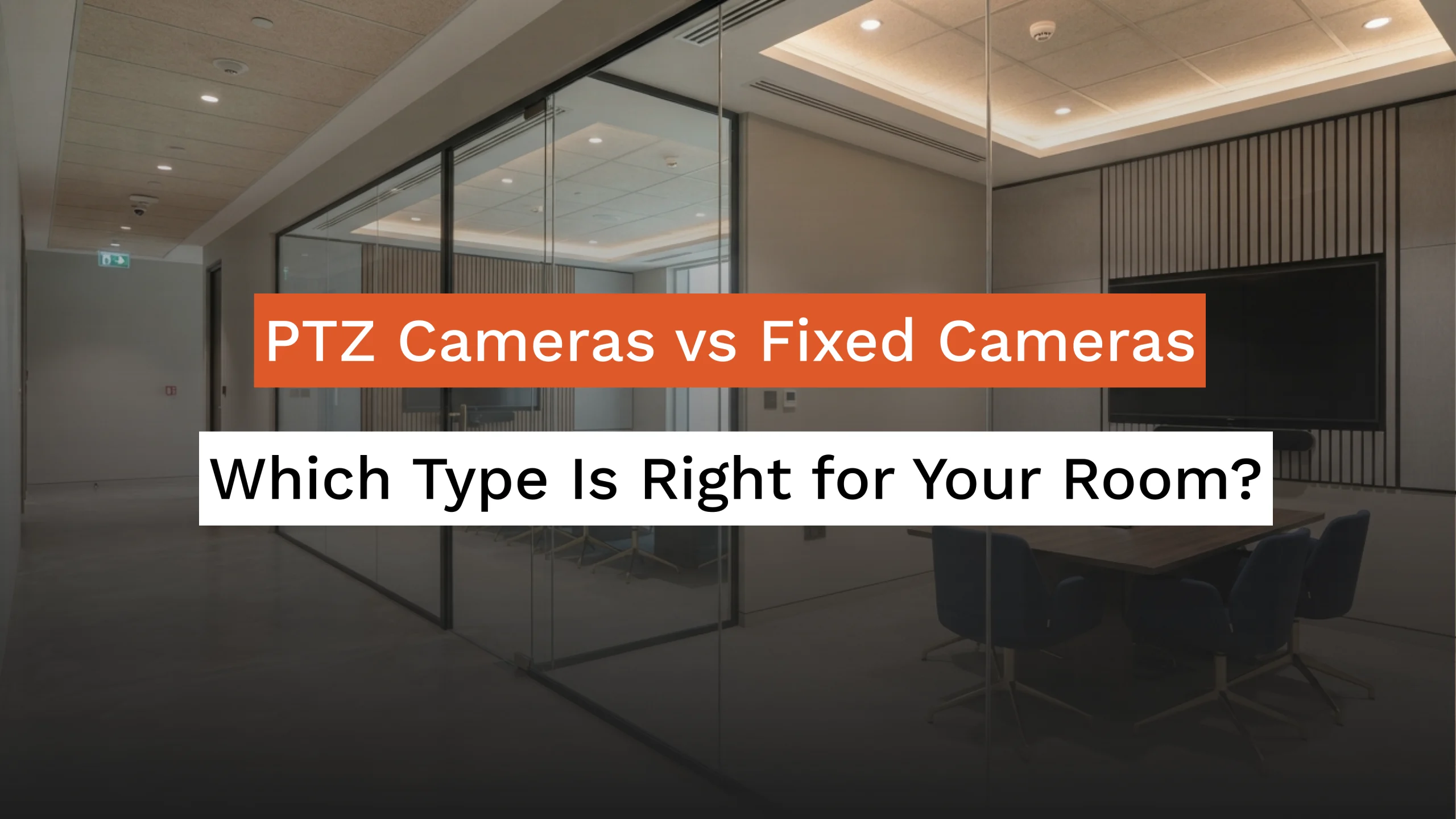
PTZ Camera or Fixed Camera? Here's What You Need to Know
Choosing the right conference room camera affects how clearly people communicate during every meeting. A camera that matches your room size and meeting style helps remote participants stay engaged, while the wrong choice can leave speakers out of frame or reduce video quality.
Many businesses compare a ptz camera meeting room setup with a fixed camera because both solve different problems. Some rooms need flexible camera movement to follow presenters, while others only need a wide-angle view that captures everyone seated around the table.
The decision also depends on how your teams collaborate. A small huddle room has very different requirements than a large executive boardroom. Understanding where each camera performs best makes it easier to invest in equipment that supports your daily meetings instead of creating unnecessary complexity.
What Is the Difference Between PTZ and Fixed Cameras?
The biggest difference is movement. A ptz camera meeting room solution allows the camera to pan from side to side, tilt up and down, and zoom in on participants. A fixed camera stays in one position throughout the meeting.
Because PTZ cameras move electronically, they can focus on presenters, switch between discussion areas, or zoom in on a whiteboard without losing image quality. Most professional models allow users to save camera presets, making it easy to move between common viewing angles with a single click.
A fixed camera for meeting room applications captures one predefined area. Modern models often include wide-angle lenses and intelligent framing features that automatically keep participants visible without physically moving the camera.
Both options support popular video conferencing platforms, but the experience they provide differs depending on the room layout and meeting format.
When Is a PTZ Camera the Better Choice?
A ptz camera meeting room setup is the better choice when meetings involve movement, presentations, or a large number of participants. The ability to adjust the camera remotely provides flexibility that a fixed camera cannot offer.
PTZ cameras are commonly installed in:
- Large conference rooms
- Executive boardrooms
- Training rooms
- Seminar spaces
- Multi-purpose meeting rooms
During a presentation, the camera can follow the speaker, zoom in on presentation material, and then return to a full-room view. This creates a better experience for remote attendees, who can clearly see the person speaking instead of watching a distant static image.
Another advantage is future flexibility. As meeting rooms evolve or furniture layouts change, a ptz camera meeting room system can adapt without requiring a complete redesign.
When Should You Choose a Fixed Camera?
A fixed camera is the better option for small meeting rooms where participants remain seated within a single viewing area. It provides consistent video without requiring manual adjustments or camera controls.
Small huddle rooms, interview rooms, and collaboration spaces rarely need the flexibility of a moving camera. In these environments, a wide-angle camera for meeting room applications can comfortably capture everyone around the table.
Many modern fixed cameras include features that improve the meeting experience without adding complexity. Depending on the model, these may include:
- AI-powered auto framing
- Speaker detection
- Digital zoom
- Noise reduction support
- Automatic image adjustment for different lighting conditions
Because there are no moving parts, fixed cameras generally require less maintenance over time. Installation is also simpler, making them a practical choice for organizations deploying multiple meeting rooms across an office.
If your meetings usually involve four to eight people sitting in fixed positions, a quality fixed camera for meeting room solution often delivers everything you need without the additional cost of PTZ functionality.
Does a 4K Conference Room Camera Really Make a Difference?
Yes. A 4K conference room camera produces noticeably sharper video, especially on large meeting room displays and during hybrid meetings.
A 4K camera records four times the resolution of Full HD (1080p). This extra detail makes facial expressions easier to recognize, improves text readability on whiteboards, and creates a more natural viewing experience for remote participants.
Higher resolution becomes even more valuable when meetings include participants joining from different locations. Clearer video helps reduce misunderstandings caused by poor image quality and allows remote attendees to stay engaged throughout the discussion.
Many professional conferencing cameras also combine 4K sensors with features such as:
- High Dynamic Range (HDR)
- Automatic exposure control
- Low-light image enhancement
- AI-based participant framing
These technologies help maintain image quality even when meeting rooms have challenging lighting conditions.
Whether you choose a PTZ model or a fixed camera, investing in a 4K conference room camera provides long-term value. As displays continue moving toward higher resolutions, 4K video ensures your meeting rooms remain compatible with modern conferencing standards.
How Does Room Size Affect Camera Selection?
Room size is one of the most important factors when selecting a conference room camera. A camera that performs well in a six-person meeting room may struggle to cover a boardroom designed for twenty participants.
For smaller rooms, a fixed camera for meeting room installations usually offers enough field of view to include everyone without additional equipment. Wide-angle lenses can often capture the full table from a single mounting position.
Medium-sized conference rooms require a closer evaluation. If presenters frequently stand at the front of the room or move between displays, a ptz camera meeting room solution provides greater flexibility. It allows the camera to follow activity rather than forcing everyone to remain in one position.
Large executive spaces have different requirements altogether. A dedicated boardroom camera should provide both wide coverage and the ability to focus on individual speakers when needed. PTZ functionality becomes particularly useful in board meetings, training sessions, and client presentations where attention shifts between multiple participants.
Businesses should also think beyond their current office layout. A meeting room that serves eight employees today may need to accommodate fifteen next year. Choosing equipment with room to grow can reduce future upgrade costs and avoid replacing the entire conferencing system.
How Do PTZ and Fixed Cameras Compare for Installation and Maintenance?
Fixed cameras are generally easier to install because they require minimal configuration. Most models can be mounted above or below a display, connected to the conferencing system, and used immediately after basic setup.
A camera for meeting room installations with fixed positioning also has fewer moving components, which can reduce maintenance over time. For organizations deploying cameras across multiple meeting spaces, this simplicity can save both installation time and ongoing support costs.
PTZ cameras require a little more planning during installation. Besides selecting the right mounting location, administrators often configure camera presets, viewing angles, and control options. If the camera will be integrated with a room control system, additional programming may also be required.
Although setup takes longer, the flexibility often justifies the effort. A ptz camera meeting room solution can adapt to different meeting formats without relocating the hardware. Preset positions allow users to switch from a full-room view to a close-up of the presenter or a whiteboard within seconds.
Regular maintenance is straightforward for both camera types. Keeping the lens clean, updating firmware, and checking network connectivity are usually enough to maintain reliable performance. PTZ cameras may require occasional testing of their movement mechanisms, while fixed cameras typically need less routine attention.
Which Camera Creates a Better Meeting Experience?
A ptz camera meeting room setup creates a more dynamic experience. The camera can focus on the active speaker, zoom in during presentations, and adjust to different areas of the room. This helps remote participants follow the conversation naturally instead of watching a single static view throughout the meeting.
A fixed camera provides consistency. Everyone remains visible within the same frame, making it ideal for team discussions where participants stay seated. Since the image does not constantly move, some organizations prefer this approach for internal meetings and daily collaboration.
Video quality also influences the overall experience. A 4K conference room camera captures finer details, making eye contact, facial expressions, and presentation content easier to see. This is especially useful during client meetings, interviews, and executive discussions where clear communication matters.
Audio should also be considered alongside video. Even the best boardroom camera cannot compensate for poor microphone placement or excessive background noise. A balanced conferencing system that combines quality cameras with suitable microphones and speakers delivers the best results.
At Oxford Integration, conference room designs are planned by considering the complete meeting environment rather than selecting individual devices in isolation. Matching the camera with the room layout, display size, and audio equipment helps create a reliable conferencing experience.
What Should You Consider Before Buying a Conference Room Camera?
Start by evaluating how your meeting room is used every day. The right choice depends less on the camera itself and more on the environment where it will operate.
Consider these questions before making a purchase:
- How many people usually attend meetings?
- Does anyone regularly present from the front of the room?
- Will participants move around during meetings?
- Is optical zoom necessary?
- Will the room host client presentations or executive meetings?
- Is a 4K conference room camera required for large displays?
- Could the room layout change in the future?
If your answers point toward larger spaces with active presenters, a ptz camera meeting room setup is likely the better investment. If meetings are smaller and participants remain seated, a fixed camera for meeting room applications can provide excellent performance with lower installation costs.
Businesses should also consider future expansion. Purchasing equipment that supports software updates, higher-resolution displays, and integration with popular conferencing platforms helps extend the life of the investment.
A well-selected boardroom camera should continue meeting business needs for years, even as collaboration technology evolves.
Which Camera Is Right for Your Conference Room?
The right camera depends on your room size, meeting style, and long-term requirements. There isn’t a single solution that fits every workspace.
If your meetings take place in small rooms where everyone stays seated, a fixed camera for meeting room applications is usually the most practical choice. It is easy to install, requires little maintenance, and delivers consistent video quality.
For larger conference rooms, executive boardrooms, or training spaces, a ptz camera meeting room setup offers greater flexibility. The ability to pan, tilt, and zoom helps remote participants stay focused on the discussion, whether someone is presenting, writing on a whiteboard, or speaking from different areas of the room.
Whichever option you choose, investing in a 4K conference room camera helps improve video clarity and prepares your meeting space for modern collaboration platforms. Pairing the right camera with quality microphones and displays creates a conference room that supports productive meetings today and remains effective as your business grows.
Businesses planning new meeting spaces or upgrading existing ones should assess the room layout, participant capacity, and collaboration goals before making a decision. At Oxford Integration, conference room solutions are designed around practical business requirements, helping organizations choose technology that matches the way their teams work.
Conclusion
Choosing between a PTZ camera and a fixed camera comes down to how your meeting room is used. Fixed cameras are an excellent fit for smaller spaces where a wide, stable view is all that’s needed. PTZ cameras provide the flexibility required for larger rooms, presentations, and meetings where participants move around.
A high-quality boardroom camera should do more than capture video. It should help everyone in the meeting, whether they’re in the room or joining remotely, communicate clearly and stay engaged. Likewise, selecting the right camera for meeting room environments means balancing room size, meeting habits, installation requirements, and future expansion plans.
If you’re planning a new conference room or upgrading an existing one, start by reviewing your room layout and the way your teams collaborate. Choosing the right 4K conference room camera and conferencing equipment from the beginning can reduce future upgrade costs and create a better meeting experience for everyone. Oxford Integration offers a range of meeting room and AV solutions that can support businesses in selecting technology suited to their workspace.
Frequently Asked Questions
What is a PTZ camera for a meeting room?
A ptz camera meeting room solution uses a camera that can pan, tilt, and zoom to capture different parts of the room. It is ideal for larger conference rooms, presentations, and meetings where speakers move around.
Is a 4K conference room camera better than a Full HD camera?
Yes. A 4K conference room camera provides higher image resolution, making faces, presentation content, and whiteboards easier to see during video meetings. It also offers better image quality for larger displays.
Which boardroom camera is best for executive meeting spaces?
A boardroom camera with PTZ functionality is often the best choice for executive boardrooms because it offers flexible viewing angles, optical zoom, and wider room coverage.
Can a fixed camera work well as a camera for meeting room setups?
Yes. A fixed camera for meeting room environments is an excellent option for small and medium-sized rooms where participants remain seated within the camera’s field of view.
What should businesses consider before choosing a conference room camera?
Businesses should evaluate room size, participant capacity, meeting style, video quality requirements, future expansion plans, and whether a fixed camera or ptz camera meeting room solution better matches their conferencing needs.