
TL;DR
- Most 10 person boardrooms need 2 microphones, while 20 person rooms usually need 3 to 4, and 30 person rooms often require 4 to 6, depending on the room layout and acoustics.
- A properly planned conference room mic system delivers better audio than simply adding more microphones.
- A wireless mic for conference room makes it easier to rearrange meeting spaces without dealing with cables.
- Room size, table shape, ceiling height, and meeting style all influence the ideal microphone setup large boardroom.
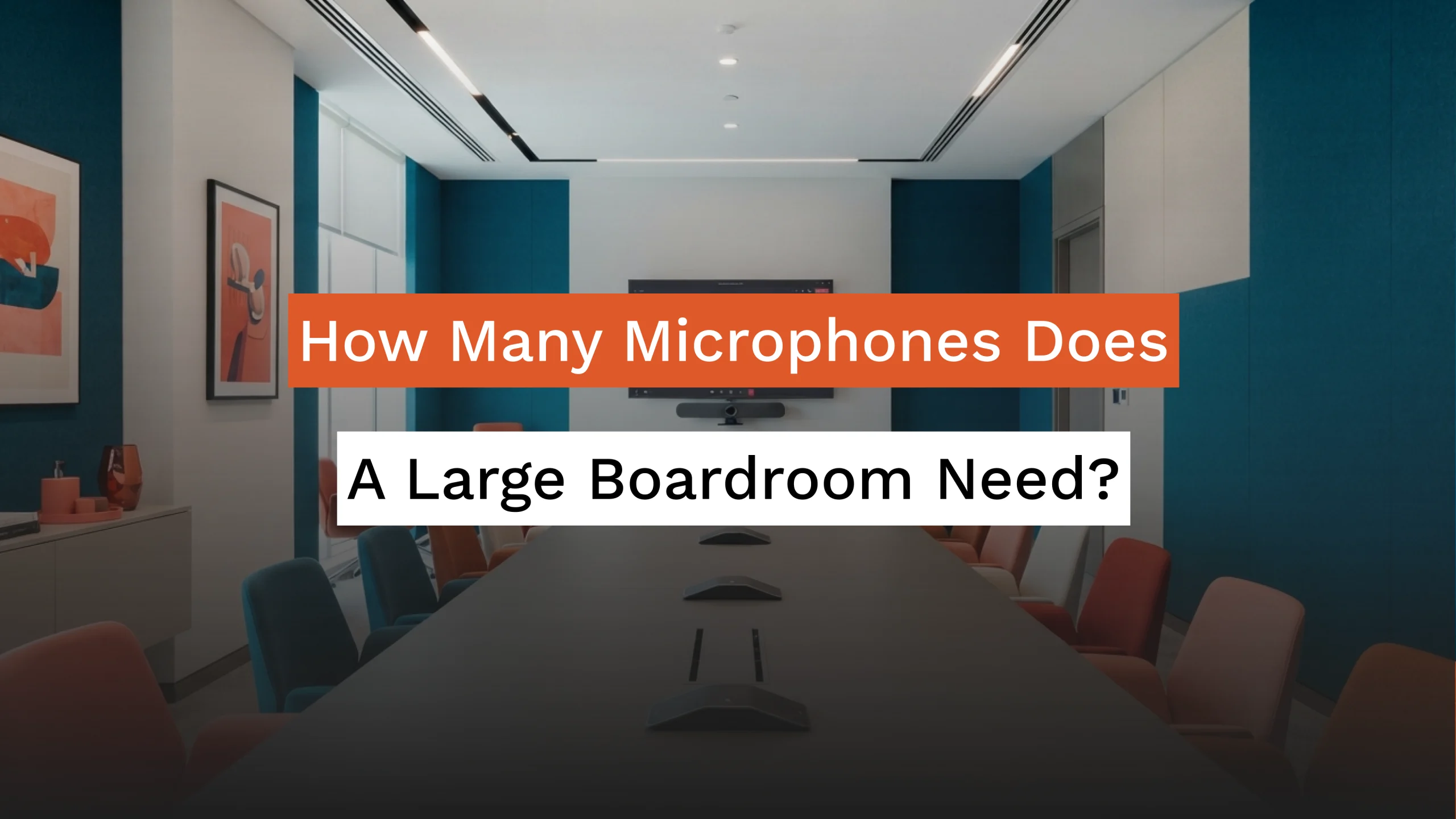
How many microphones does a 10 to 30 person boardroom need?
Most boardrooms need one microphone for every 4 to 8 participants, although the exact number depends on seating distance, room acoustics, and the type of microphones being used.
Here’s a general sizing guide:
Room Capacity | Recommended Microphones | Typical Setup |
10 people | 2 | Boundary microphones or wireless speakerphones |
15 people | 2 to 3 | Table microphones with overlapping coverage |
20 people | 3 to 4 | Multiple table zones or ceiling microphone array |
25 people | 4 to 5 | Zoned microphone placement |
30 people | 4 to 6 | Ceiling arrays or distributed wireless microphones |
These recommendations work well for standard boardrooms. Larger rooms with high ceilings, glass walls, or long conference tables may require additional microphones to maintain consistent voice pickup.
Why can't one microphone cover a large boardroom?
One microphone rarely provides clear and consistent audio across a large conference room.
As participants sit farther away from the microphone, their voices become quieter while background noise and room echo become more noticeable. Remote attendees may struggle to understand speakers sitting at the far ends of the table.
A properly designed conference room mic system creates multiple audio pickup zones. Instead of expecting one microphone to capture every voice, strategically placed microphones ensure participants can speak naturally without raising their voices.
The result is better speech clarity, fewer interruptions, and a smoother meeting experience for everyone, whether they are in the room or joining remotely.
What affects the number of microphones your room needs?
Room dimensions
A compact 20-person meeting room often needs fewer microphones than a spacious 15-person executive boardroom because participants sit closer together. Larger rooms increase the distance between speakers and microphones, making it harder to capture voices consistently.
Ceiling height also matters. Higher ceilings can create more sound reflections, especially when paired with hard surfaces such as glass or concrete.
Table shape
The shape of the conference table has a direct impact on microphone placement.
- Rectangular tables require microphones spaced evenly along the center to create balanced pickup zones.
- Round tables usually need fewer microphones because participants sit closer together.
- U-shaped layouts often benefit from wireless microphones, especially when presenters move around during meetings.
Planning the microphone layout around the table design helps create more consistent audio throughout the room.
Meeting style
Think about how the room is used every day.
If meetings are highly collaborative and everyone participates regularly, additional microphones improve speech pickup. If the room is mainly used for presentations where one or two people speak most of the time, fewer microphones may be enough.
Room acoustics
Room acoustics can affect audio quality as much as the microphones themselves.
Glass walls, marble floors, exposed ceilings, and empty rooms reflect sound, making conversations harder to understand. Adding acoustic panels, carpets, curtains, or upholstered furniture often improves speech clarity more than adding extra microphones.
The number of participants is only one part of the equation. Room design, furniture layout, and meeting style all influence how many microphones are required for clear communication.
Which microphone technology works best for large boardrooms?
Boundary microphones
Boundary microphones are placed directly on the conference table and capture voices from several directions.
They are a practical option for small and medium-sized boardrooms because they are easy to install and provide reliable voice pickup for participants seated nearby.
Ceiling microphone arrays
Ceiling microphone arrays have become popular in executive meeting spaces.
Using beamforming technology, these systems automatically focus on active speakers while reducing unwanted background noise. Since the microphones are mounted overhead, the conference table remains free of equipment and cables.
Wireless conference microphones
A wireless mic for conference room is ideal for businesses that regularly rearrange meeting spaces or use one room for multiple purposes.
Without cables limiting microphone placement, rooms can easily switch between boardroom meetings, training sessions, workshops, and presentations.
Integrated wireless speakerphones
Many organizations now choose a wireless microphone with speaker for conference room because one device handles both voice pickup and speaker output.
This reduces installation time, minimizes hardware on the conference table, and provides a cleaner meeting experience for both in-room and remote participants.
How should microphones be positioned?
Microphones should be positioned so participants can speak naturally without leaning forward or raising their voices. Rather than placing every microphone in the center of the table, divide the room into multiple coverage zones.
For the best performance:
- Space microphones evenly across long conference tables.
- Keep microphones away from air conditioning vents and projector fans.
- Avoid placing microphones too close together, as overlapping pickup areas can reduce audio quality.
- Position speakers so they do not direct sound back into the microphones, helping reduce echo and feedback.
A carefully planned microphone setup large boardroom often delivers better results with fewer microphones than an installation that simply adds more devices without considering coverage.
Should you choose wired or wireless microphones?
For most modern boardrooms, wireless systems offer greater flexibility than traditional wired setups.
A wireless mic for conference room eliminates cable clutter and allows meeting spaces to be rearranged without moving or rewiring equipment. This is especially useful for organizations that use the same room for executive meetings, training sessions, client presentations, and collaborative workshops.
Wired microphones still have their place in permanent installations where the room layout rarely changes. However, many businesses now prefer wireless systems because they are easier to deploy, maintain, and adapt as meeting requirements evolve.
What are the advantages of a wireless microphone with built-in speakers?
A wireless microphone with speaker for conference room combines voice pickup and audio playback into a single device. Instead of installing separate microphones and speakers, businesses can simplify the conference room setup while maintaining clear communication.
Some of the key benefits include:
- Reduced cable management and cleaner meeting tables.
- Faster installation compared to separate audio components.
- Clear sound for both in-room and remote participants.
- Easier maintenance with fewer devices to manage.
- Better flexibility for hybrid meetings and multipurpose rooms.
These systems are particularly useful for organizations that rely on platforms such as Microsoft Teams, Zoom, Google Meet, or Cisco Webex for daily communication.
What mistakes do businesses make when planning a boardroom audio system?
- Ignoring room acoustics during planning.
- Choosing consumer-grade wireless products instead of enterprise solutions.
- Buying equipment without considering future expansion.
- Installing microphones without planning coverage zones.
- Overlooking compatibility with video conferencing platforms.
How do you future-proof a conference room microphone system?
Choose a solution that can grow with your business instead of meeting only your current requirements.
As organizations expand, meeting rooms often accommodate larger teams and more hybrid collaboration. A scalable conference room mic system allows additional microphones or audio devices to be added without replacing the entire installation.
It’s also worth selecting equipment that supports regular firmware updates and integrates with popular conferencing platforms. This helps maintain compatibility as software and workplace technology continue to evolve.
Planning for future growth usually delivers better long-term value than replacing an undersized system after only a few years.
Conclusion
Choosing the right number of microphones for a large boardroom involves much more than counting seats. Room dimensions, table layout, acoustics, meeting style, and future expansion all influence the ideal audio setup.
Instead of adding as many microphones as possible, focus on creating balanced voice coverage with high-quality equipment. A properly planned conference room mic system, combined with the right wireless mic for conference room or wireless microphone with speaker for conference room, helps ensure every participant can communicate clearly, whether they are sitting in the boardroom or joining remotely.
If you’re planning a new meeting space or upgrading an existing one, start by evaluating your room layout and communication needs. Investing in the right microphone setup large boardroom from the beginning can improve meeting quality, reduce future upgrade costs, and support productive collaboration for years to come.
Frequently Asked Questions
How many microphones are required for a 20-person boardroom
Most 20-person boardrooms need three to four microphones, depending on the room size, seating arrangement, and acoustic conditions. Proper placement is just as important as the number of microphones.
Is a wireless microphone system better than a wired conference microphone?
A wireless mic for conference room is generally the better choice for businesses that need flexibility and cleaner installations. Wired systems are still suitable for permanent meeting rooms where furniture rarely changes.
What is the advantage of a wireless microphone with an integrated speaker?
A wireless microphone with speaker for conference room combines voice pickup and speaker output into one device. This simplifies installation, reduces hardware on the table, and improves communication during hybrid meetings.
How do I choose the right conference room microphone system?
Start by considering participant capacity, room dimensions, table layout, conferencing platform compatibility, and future expansion plans. A well-designed conference room mic system provides consistent audio coverage without unnecessary equipment.
Can one microphone cover an entire large boardroom?
In most cases, no. Large boardrooms require multiple microphones positioned strategically across the room to ensure every participant can be heard clearly while minimizing background noise and echo.