
TL;DR
- AI auto-framing automatically keeps everyone in view during a meeting.
- An AI camera meeting room setup improves visibility for remote participants.
- Auto-framing and auto-tracking solve different meeting challenges.
- Intelligent cameras work especially well in hybrid meetings and larger conference rooms.
- Businesses that run frequent video meetings often save time and create a more professional experience with AI-powered cameras.
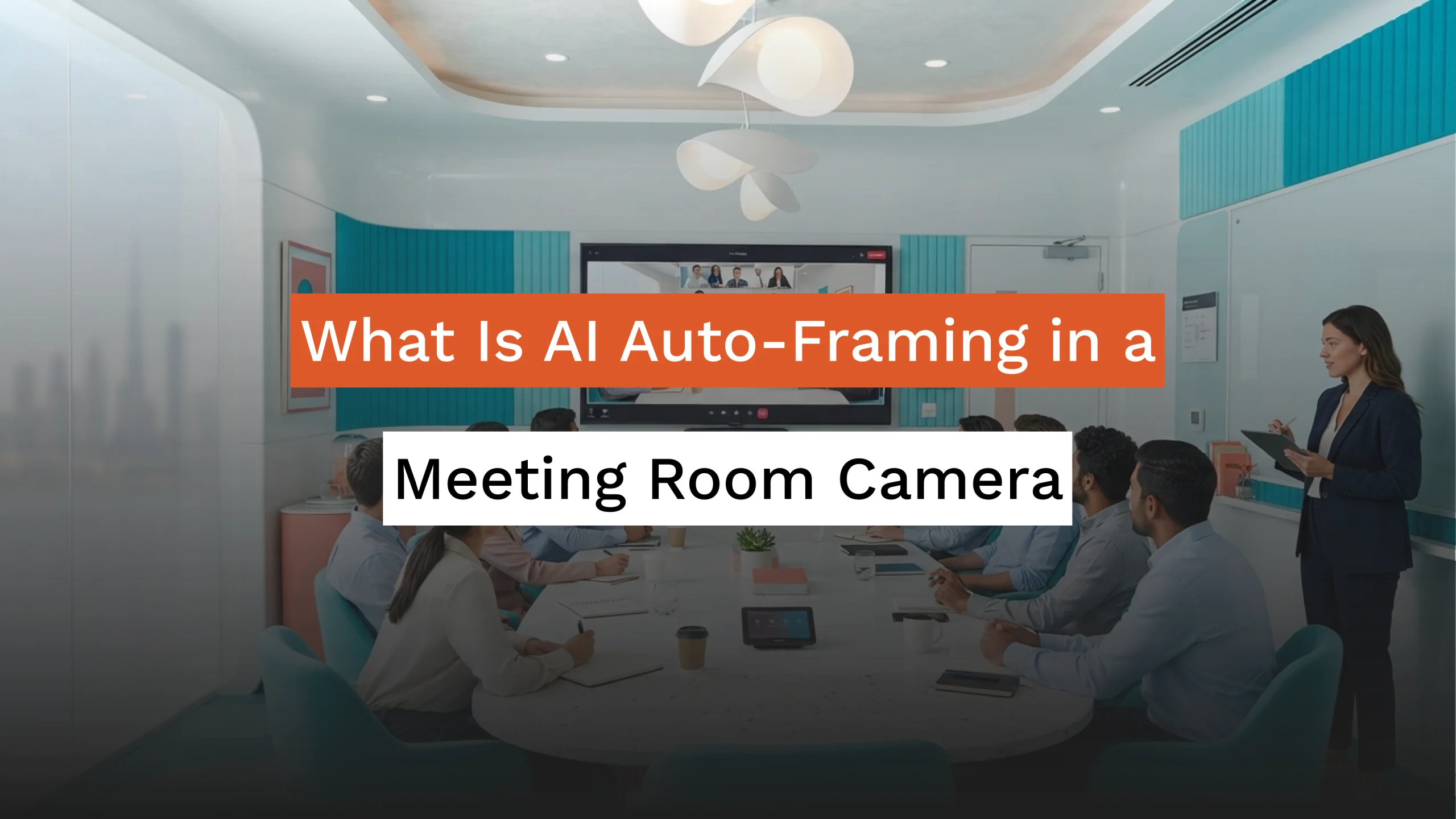
AI auto-framing is a camera feature that automatically detects participants in a meeting room and adjusts the camera angle and zoom so everyone stays visible. Instead of relying on manual camera adjustments, the system continuously reframes the shot as people enter, leave, or move around the room.
The feature has become increasingly important as hybrid work grows. According to a report by the Microsoft, most employees now want flexible work arrangements, which means businesses need meeting spaces that work equally well for in-person and remote participants.
An AI camera meeting room solution helps bridge that gap by making meetings feel more natural and inclusive. Remote attendees can clearly see participants, follow conversations more easily, and stay engaged throughout the meeting.
What Is AI Auto-Framing in a Meeting Room Camera?
AI auto-framing is a camera feature that automatically detects the people in a meeting room and adjusts the camera view so everyone remains visible. The system continuously analyzes the room and creates an appropriate frame without requiring anyone to manually reposition the camera.
In a traditional meeting setup, a fixed camera often captures too much empty space or misses participants seated at the edges of the table. An auto framing camera solves this problem by automatically adjusting zoom levels and framing based on where participants are sitting.
For businesses using an AI camera meeting room setup, this means meetings start faster and remote attendees get a better view of everyone in the room.
How Does AI Auto-Framing Work?
AI auto-framing works by combining image recognition, motion detection, and machine learning algorithms. The camera scans the room, identifies people, and determines the most suitable composition for the video feed.
When someone joins the meeting late, the camera widens the frame to include the new participant. If participants move closer together, the camera can tighten the view to create a more natural and focused image.
Most modern video conferencing cameras with auto framing perform these adjustments within seconds. The process happens automatically in the background, allowing participants to focus on the discussion instead of managing camera settings.
What Is the Difference Between Auto-Framing and Auto-Tracking?
Auto-framing and auto-tracking are often mentioned together, but they serve different purposes.
Auto-framing:
- Keeps all participants visible in the camera frame
- Adjusts zoom and composition based on where people are seated
- Works best for team discussions and collaborative meetings
Auto-tracking:
- Follows an individual speaker or presenter
- Automatically pans, tilts, or zooms to keep that person in view
- Works best for presentations, training sessions, and demonstrations
A conference room camera with auto tracking is particularly useful when presenters move around the room or use whiteboards and displays during meetings. Meanwhile, an auto framing camera is usually the better choice for discussions where multiple people are actively participating.
Many modern conference solutions combine both technologies, allowing businesses to switch between group framing and speaker tracking depending on the type of meeting being conducted.
Why Are Businesses Choosing Video Conferencing Cameras with Auto Framing?
Businesses are adopting video conferencing cameras with auto framing because they make meetings more engaging and reduce the friction that often comes with virtual collaboration. Everyone in the room remains visible, and meetings can start without someone adjusting the camera beforehand.
Visibility plays a major role in communication. Remote participants can better understand facial expressions, gestures, and reactions when every participant is properly framed. This creates a more natural conversation and reduces the disconnect that can occur during video meetings.
A video conferencing camera with auto framing also saves time. Teams can walk into the room, start the meeting, and allow the camera to automatically adjust itself. For organizations that conduct multiple meetings every day, those small time savings quickly add up.
Businesses also appreciate the professional appearance that intelligent cameras provide. Client meetings, executive discussions, and presentations look more organized when the camera consistently delivers a well-composed video feed.
What Are the Benefits of an Auto Tracking Camera for Conference Room Setups?
An auto tracking camera for conference room environments improves meeting experiences by automatically following speakers and presenters. This keeps the focus on the person leading the discussion and helps remote attendees stay engaged.
Some of the key benefits include:
- Better participant engagement: Remote attendees can clearly see speakers and follow conversations more easily.
- More professional meetings: Camera movements happen automatically, creating a polished viewing experience.
- Less manual intervention: Employees do not need to reposition cameras during meetings.
- Improved presentations: Presenters can move naturally around the room while remaining visible.
- Better inclusivity: Everyone, whether in the room or joining remotely, gets a clearer view of the discussion.
A conference room camera with auto tracking is particularly valuable in training sessions, boardroom presentations, and client demonstrations where speakers frequently move around the room. Instead of restricting movement to stay on camera, presenters can focus entirely on delivering information and interacting with participants.
As hybrid work continues to expand, businesses are increasingly viewing intelligent meeting room cameras as practical tools that improve communication and create a better experience for everyone involved in the meeting.
When Do You Actually Need AI Auto-Framing?
You need AI auto-framing when your meetings regularly include remote participants and you want everyone in the room to remain visible without manually adjusting the camera. The feature is especially useful in hybrid workplaces where communication depends heavily on video conferencing.
Companies with distributed teams often struggle with meeting experiences where remote employees can only see part of the room. An AI camera meeting room setup automatically keeps participants in frame, making conversations more inclusive and easier to follow.
AI auto-framing is also valuable for businesses that frequently host client meetings. A well-framed video feed creates a more professional impression and helps participants stay focused on the discussion rather than technical issues.
Training sessions are another strong use case. Instructors and participants may move throughout the room, and intelligent cameras can continuously adapt the frame to maintain visibility. Organizations that use large conference rooms often benefit even more because fixed cameras frequently fail to capture everyone effectively.
Which Meeting Rooms Benefit the Most from AI Camera Technology?
AI-powered meeting cameras work best in spaces where participants are spread out or move around during discussions. Intelligent framing can automatically adjust to different seating arrangements and meeting styles.
Boardrooms
Boardrooms often host executive meetings, client presentations, and strategic discussions involving multiple participants. An auto framing camera ensures everyone at the table remains visible and equally represented on screen.
Training Rooms
Training sessions typically involve presenters moving between displays, whiteboards, and participants. A conference room camera with auto tracking can keep presenters in view without requiring someone to operate the camera manually.
Large Conference Rooms
In larger spaces, participants may sit far apart, making it difficult for a fixed camera to capture everyone effectively. AI-powered cameras automatically widen or tighten the frame based on where people are positioned.
Collaboration and Brainstorming Spaces
Creative meeting rooms usually involve movement and interactive discussions. Team members may stand, write on whiteboards, or gather in smaller groups. An AI camera meeting room solution adapts to these changes and helps remote attendees stay connected to the conversation.
Businesses do not need an intelligent camera in every meeting room. However, rooms that host regular video meetings, presentations, or hybrid collaboration sessions often see noticeable improvements in communication and participant engagement after adopting AI-powered conferencing technology.
How Do AI Cameras Improve Hybrid Meetings?
AI cameras improve hybrid meetings by giving remote participants a clear and dynamic view of everyone in the room. Instead of looking at empty seats or partially visible attendees, remote employees can follow conversations more naturally.
An AI camera meeting room setup automatically adjusts as people enter, leave, or move within the space. This keeps participants centered in the frame and reduces the need for manual camera adjustments during meetings.
Better visibility also improves collaboration. Team members can pick up on facial expressions, gestures, and non-verbal cues that are often lost in poorly framed video calls. As a result, discussions feel more inclusive and remote employees are more likely to participate actively.
For businesses that rely heavily on hybrid work, intelligent camera technology helps create a more consistent meeting experience regardless of where employees are located.
How Do You Choose the Right Video Conferencing Camera with Auto Framing?
The right video conferencing camera with auto framing depends on your room size, meeting style, and collaboration requirements. A camera that works well in a small huddle room may not provide adequate coverage in a large boardroom.
When comparing options, consider the following factors:
- Room size: Choose a camera with a field of view suitable for your meeting space.
- Video quality: Look for at least 4K resolution for sharper images and better participant visibility.
- Tracking capabilities: Determine whether you need only auto-framing or both auto-framing and speaker tracking.
- Platform compatibility: Verify support for platforms such as Microsoft Teams, Zoom, and Google Meet.
- Camera movement: Select a solution that provides smooth framing adjustments without sudden movements.
- Scalability: Consider whether the system can support future room expansions and changing collaboration needs.
An auto tracking camera for conference room environments can be particularly valuable if presentations and training sessions are common in your organization.
Is AI Auto-Framing Worth the Investment?
For organizations that conduct frequent video meetings, AI auto-framing is often a worthwhile investment. Intelligent cameras reduce setup time, improve visibility, and create a more professional meeting environment.
The value extends beyond convenience. Better meeting experiences can lead to improved engagement, fewer communication gaps, and more productive discussions. Employees spend less time dealing with technical issues and more time focusing on decisions and collaboration.
A conference room camera with auto tracking can provide additional benefits for organizations that regularly host presentations, training programs, and client meetings. Presenters can move naturally around the room while remaining visible to remote attendees.
As hybrid work continues to shape modern workplaces, intelligent meeting room cameras are becoming practical communication tools rather than optional upgrades. Businesses investing in AI-powered conferencing technology today are positioning themselves to support more effective collaboration in the years ahead.
Conclusion
AI auto-framing has changed how businesses conduct video meetings by automatically keeping participants visible and properly framed throughout the conversation. Instead of relying on manual camera adjustments, teams can focus entirely on discussions while the camera continuously optimizes the view.
An AI camera meeting room solution is particularly valuable for hybrid teams, client presentations, training sessions, and larger conference rooms where visibility directly affects communication quality. Combined with a conference room camera with auto tracking, intelligent cameras can create a more engaging and professional experience for both in-room and remote participants.
As organizations continue to adopt hybrid work models, investing in video conferencing cameras with auto framing can help improve collaboration, reduce meeting friction, and ensure everyone feels equally involved in discussions.
Frequently Asked Questions
What is AI auto-framing in a meeting room camera?
AI auto-framing is a feature that automatically detects participants and adjusts the camera angle and zoom so everyone remains visible during a meeting.
How does a conference room camera with auto tracking work?
A conference room camera with auto tracking uses artificial intelligence and motion detection to follow speakers or presenters as they move around the room.
Is a video conferencing camera with auto framing suitable for small meeting rooms?
Yes. A video conferencing camera with auto framing works well in small meeting rooms by keeping participants centered and eliminating unnecessary empty space in the video feed.
Who should use an auto tracking camera for conference room setups?
Businesses that frequently conduct presentations, training sessions, hybrid meetings, and client discussions can benefit significantly from an auto tracking camera for conference room environments.
Does an AI camera meeting room improve hybrid collaboration?
Yes. An AI camera meeting room setup gives remote participants a clearer view of everyone in the room, making meetings more inclusive and improving collaboration between in-person and remote teams.