TL;DR
- Glass reflects almost all the sound that hits it, so a glass wall meeting room usually has a longer reverberation time than a drywall room of the same size, even before anyone opens their laptop.
- Ceiling or beamforming mic arrays generally handle glass rooms better than table mics, because they can be pointed away from the glass and tuned to ignore reflections.
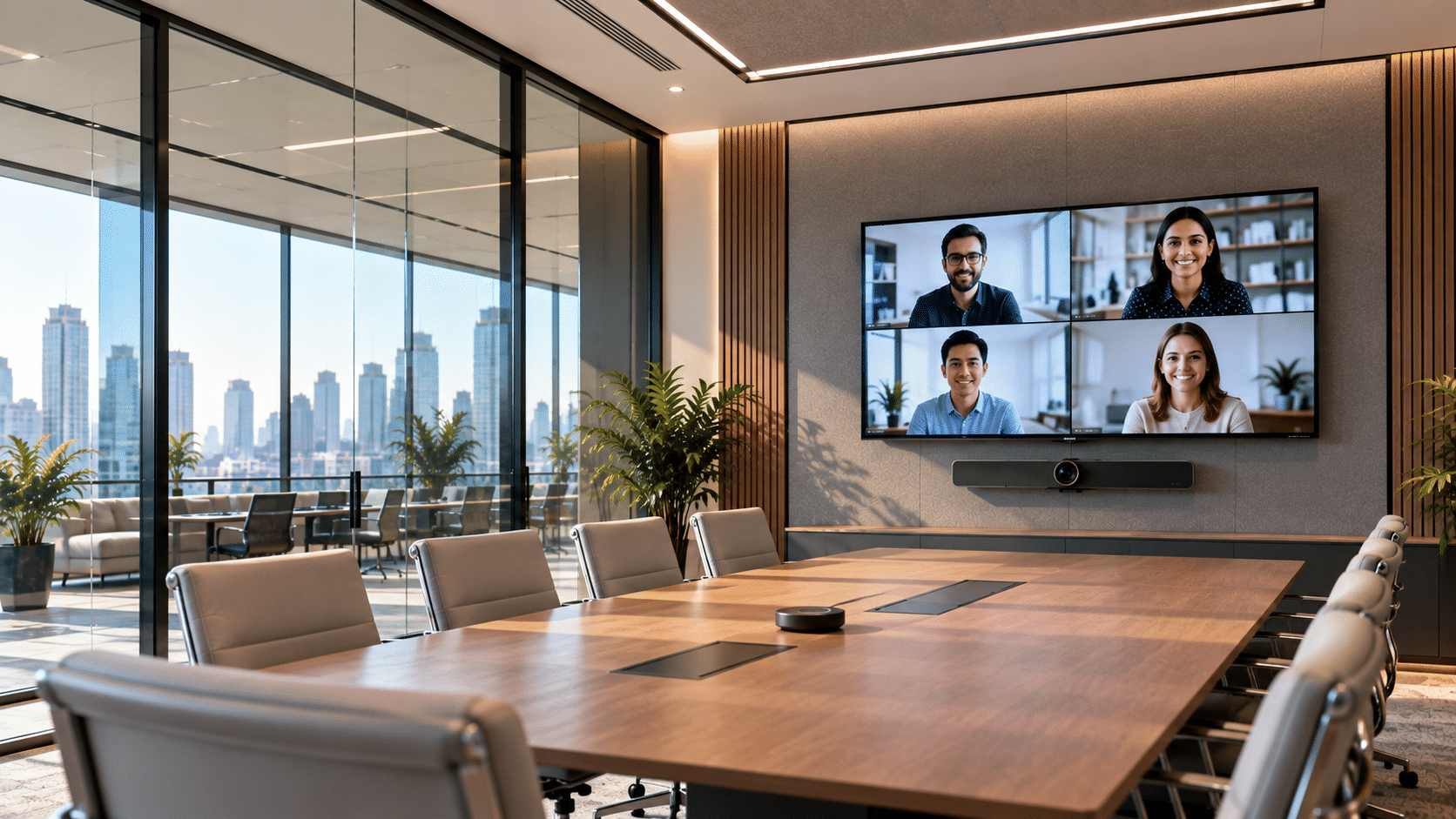
- A proper conference room AV system needs three things working together: acoustic treatment, the right microphone placement, and a camera wide enough to catch everyone at the table.
- Glare and backlighting from glass walls ruin video quality faster than most people expect. Camera placement and window film matter as much as the microphone.
- Fixing a glass room usually costs less than replacing it. Acoustic panels, a ceiling mic array, and a smarter camera position solve most of the problem without touching the architecture.
Why Do Glass Walls Cause Bad Audio in Video Calls?
Glass reflects sound instead of absorbing it, so voices bounce around the room and build up into echo and reverberation. Soft materials like carpet, fabric, and acoustic panels soak up sound energy. Glass does almost none of that. Glass reflects nearly all the sound waves that reach its surface, so instead of being absorbed, those waves keep traveling around the room and stacking up as reflections.
In a glass meeting room, sound reflections can make speech harder to understand. Parallel surfaces create flutter echo, causing microphones to pick up repeated reflections that muddy voices.
What Is Flutter Echo, and Why Does It Show Up in Glass Rooms Specifically?
Flutter echo is a rapid, repeating echo caused by sound bouncing between two hard, parallel surfaces. It’s different from general reverberation because it’s directional and repetitive rather than a diffuse wash of sound. It occurs when two reflective surfaces within a room are parallel, such as glass partitions and windows facing each other, and it’s one of the main reasons video call audio from a glass room can sound almost metallic.
How Much Worse Is a Glass Room Than a Standard Drywall Room?
A glass room typically has double or more the reverberation time of a treated drywall room of the same size. One documented case makes this concrete: an acoustic consultant measured a glass-walled boardroom at an RT60 of 1.4 seconds, more than double the recommended reverberation time for boardrooms, before any treatment was added. After installing wall panels, ceiling panels, and corner absorbers, the same room measured 0.6 seconds.
RT60 is the standard way acousticians measure how long sound takes to fade in a room. For meeting rooms, most acoustic engineers aim for under 0.6 seconds. Anything above 1 second and speech starts to blur together, especially over a microphone that’s also trying to reject background noise.
What Does a Working Conference Room AV System Look Like in a Glass Room?
- Treat the room first: Add absorption before you touch the equipment. Panels, ceiling clouds, or acoustic fabric on the non-glass walls give the microphone a fighting chance.
- Pick a mic that matches the room shape: Ceiling arrays and beamforming mics reject reflections better than a single table puck.
- Position the camera for light, not just angle: Glass walls create backlighting problems that a good microphone can’t fix.
- Test with a real call, not a room tone check: Reverb sounds different once a laptop, an HVAC vent, and a hallway conversation are added to the mix.
Which Microphone Type Works Best for a Glass-Walled Room?
Ceiling-mounted or beamforming mic arrays generally outperform table mics in glass rooms because they can be aimed away from the glass and use software to focus on voices while ignoring reflected sound. A table mic sits at the same height as the glass reflections bouncing across the table, so it picks up the echo along with the voice. A ceiling array, by contrast, can use multiple mic elements and steer its pickup pattern toward whoever is speaking.
This isn’t a universal rule. A small huddle room with only one glass wall might do fine with a good table mic and some absorption. A larger glass box with walls on two or three sides usually needs the ceiling array plus wall treatment to get clean audio.
How Do You Stop Glass Walls from Wrecking the Video, Not Just the Audio?
- Position the camera so glass walls are behind the camera, not behind the presenter.
- Use anti-glare or frosted film on the lower half of glass partitions to cut reflections without blocking light.
- Add a warm, even light source at desk height so the camera isn’t relying on window light alone.
- Avoid placing screens or bright monitors directly opposite glass, since double reflections confuse auto-exposure.
What Acoustic Treatment Actually Reduces Echo in a Glass Room?
Wall-mounted absorption panels, ceiling clouds, and soft furnishings reduce echo by giving sound something to absorb instead of a hard surface to bounce off. You don’t need to treat every surface. Most acoustic consultants treat the wall directly opposite the glass first, then the ceiling, because those two surfaces cause the worst flutter echo.
Furniture matters too. An empty glass room with a bare table sounds worse than the same room with upholstered chairs, curtains, or even a rug. Hard surfaces like glass walls, large drywall sections, and bare floors reflect sound waves for longer, while cloth-covered chairs and carpet absorb that energy instead.
Can You Fix Glass Wall Acoustics Without Removing the Glass?
Yes. Most fixes work with the glass in place, using panels, films, or velcro-mounted absorbers designed specifically for glass surfaces. Removing or replacing glass walls is expensive and usually unnecessary. Glass-specific acoustic absorbers now mount directly to glass without drilling, which matters in leased office space where you can’t modify the structure. Manufacturers have built mounting kits specifically because so many offices are stuck with glass walls they can’t remove: velcro mounting kits now let companies install wall-mounted sound absorbers directly onto glass surfaces without changing the design or layout of the room.
Curtains are another underused option. A heavy curtain that can be drawn across the glass during video calls and opened afterward gives you both the open look and usable acoustics, at the cost of manually managing the curtain.
Comparison: Glass Room Fixes at a Glance
Fix | What it solves | Typical cost level | Keeps the open glass look |
Acoustic wall panels | Echo, flutter echo, reverberation | Low to moderate | Partially, panels are visible |
Ceiling acoustic clouds | Overall noise level, ceiling reflections | Moderate | Yes, glass walls stay clear |
Glass-mount absorbers | Reflections without drilling into walls | Moderate | Mostly, thin profile on glass |
Beamforming/ceiling mic array | Voice pickup accuracy, less handling noise | Moderate to high | Yes |
Window film or frosting | Camera glare, backlighting, privacy | Low to moderate | Mostly, some visual change |
Heavy curtains or blinds | Echo and privacy during calls only | Low | Yes, when open |
Sound masking speakers | Confidentiality, sound leaking outside room | Moderate | Yes |
What About Privacy? Glass Walls Leak Sound as Well as Reflect It
Glass doesn’t just bounce sound inside the room, it also lets sound pass through and lets conversations leak into the surrounding office. This is a separate problem from echo, and it needs a separate fix. Sound masking systems, which play a low, speech-shaped background noise near the glass, are the standard answer. Sound masking works by introducing a tuned background noise through ceiling or wall-mounted speakers, tuned to the frequency of human speech so nearby conversations become harder to understand rather than simply louder or noisier.
Setting Up the Room: A Practical Walkthrough
Here’s how this plays out in an actual mid-size glass-walled conference room, roughly 14 by 18 feet, with glass on two adjacent walls.
Step 1: Measure before you buy anything: A basic RT60 reading, even a rough one from a phone app, tells you whether you’re dealing with a moderate echo problem or a severe one. Rooms above 1 second RT60 need more aggressive treatment than a couple of panels.
Step 2: Treat the solid walls and ceiling first: Since the glass can’t absorb sound, the non-glass surfaces need to do more work than they would in a standard room. Ceiling clouds above the table area usually give the best return per panel.
Step 3: Choose the mic array based on table shape: A rectangular table under 16 feet often works with a single ceiling array. Longer tables or L-shaped rooms may need two arrays or a mix of ceiling and table mics working together.
Step 4: Set camera position to avoid the glass wall as a backdrop: If both glass walls can’t be avoided, add film or blinds to the wall directly behind where presenters usually stand.
Step 5: Run a real hybrid meeting as a test, not a solo check: Reverberation and echo often only become obvious once a remote participant is on the call and can react in real time to what they’re hearing.
Video Conferencing System for Conference Room: What to Actually Buy
The equipment matters less than getting the order above right, but a few categories are worth knowing before you shop:
- All-in-one video bars work well for small to mid-size glass rooms with light treatment needs. They combine camera, speaker, and mic in one unit and are simple to install.
- Ceiling mic and speaker systems suit larger or more reflective rooms where a single bar can’t reach every seat.
- PTZ or auto-framing cameras help when the table is long enough that a fixed wide-angle lens leaves people at the ends looking small or partially out of frame.
- Room scheduling and control panels aren’t acoustic fixes, but they reduce the fumbling that makes hybrid meetings start late, which by itself has become a widely reported source of lost time in hybrid meetings. Owl Labs’ 2025 State of Hybrid Work Report found that 77% of employees have lost time because meetings started late due to technical difficulties, and 67% have tried to set up video technology for a meeting and given up because it was too difficult.
None of this needs to happen at once. Many offices treat one flagship glass room fully, learn what worked, then apply the same approach to the rest of the AV rooms across the floor.
Final Thoughts
A glass-walled meeting room doesn’t have to sound like a gymnasium on every call. The room itself is working against you the moment glass goes up, but treating the ceiling and one or two walls, choosing a ceiling or beamforming mic over a table puck, and fixing camera placement before glare becomes a problem will solve most of what makes these rooms frustrating on video calls.
Start with the room you use most. Get an RT60 reading, look at where the camera currently points relative to the glass, and treat the surfaces that are causing the worst reflections first. If the room still sounds rough after that, bring in an AV integrator who can measure the space properly and recommend equipment sized to the actual problem, not a generic package.
Frequently Asked Questions
Does adding curtains actually help glass room acoustics, or is it mostly cosmetic?
Curtains genuinely help. Heavy fabric curtains absorb sound energy that would otherwise bounce off the bare glass, and they’re one of the simplest fixes available. Soundproofing curtains made with mass-loaded vinyl hang from frames that are easy to put up and take down, which makes them a practical option in a room you can’t permanently alter.
Is a bigger, more expensive camera the fix for glare on a glass wall?
No. Glare and backlighting are lighting problems, not resolution problems. A higher-end camera with the same fixed exposure will still struggle against a bright window behind a speaker’s head. Repositioning the camera, adding window film, or adding a front-facing light source solves this more reliably than upgrading the camera itself.
How many acoustic panels does a typical glass conference room need?
It depends on room size and how much glass is involved, but treating one or two of the non-glass walls plus the ceiling area above the table is usually the starting point. Acoustic panels on just one or two walls can meaningfully reduce reverberation and improve speech clarity, video call quality, and overall meeting comfort, so full-room coverage isn’t always necessary.
Do glass walls actually affect video call quality as much as people say, or is it exaggerated?
It’s not exaggerated. Poor room acoustics is a documented, common cause of bad hybrid meeting audio, and glass is one of the most common offenders because offices increasingly favor open, glass-heavy designs. Offices remain under-equipped for hybrid meetings, and technical issues including audio and video lag continue to be a widely reported source of lost meeting time.
Can sound masking replace acoustic panels, or do you need both?
You need both if privacy and echo are both concerns. Sound masking addresses sound leaking out of the room to protect confidentiality. It does nothing to reduce the echo and reverberation happening inside the room during the call. Panels and ceiling treatment solve the in-room clarity problem; masking solves the leakage problem. They’re complementary, not interchangeable.