
TL;DR
- Choosing the right video conferencing camera for large rooms depends on room size, seating layout, and meeting platform.
- A dedicated conference room camera offers better coverage, zoom, and participant tracking than a standard webcam.
- Microsoft Teams certified cameras simplify deployment and improve compatibility for hybrid meetings.
- Camera placement, microphones, lighting, and network quality all affect the meeting experience.
- Planning the entire room instead of buying individual devices helps avoid expensive upgrades later.
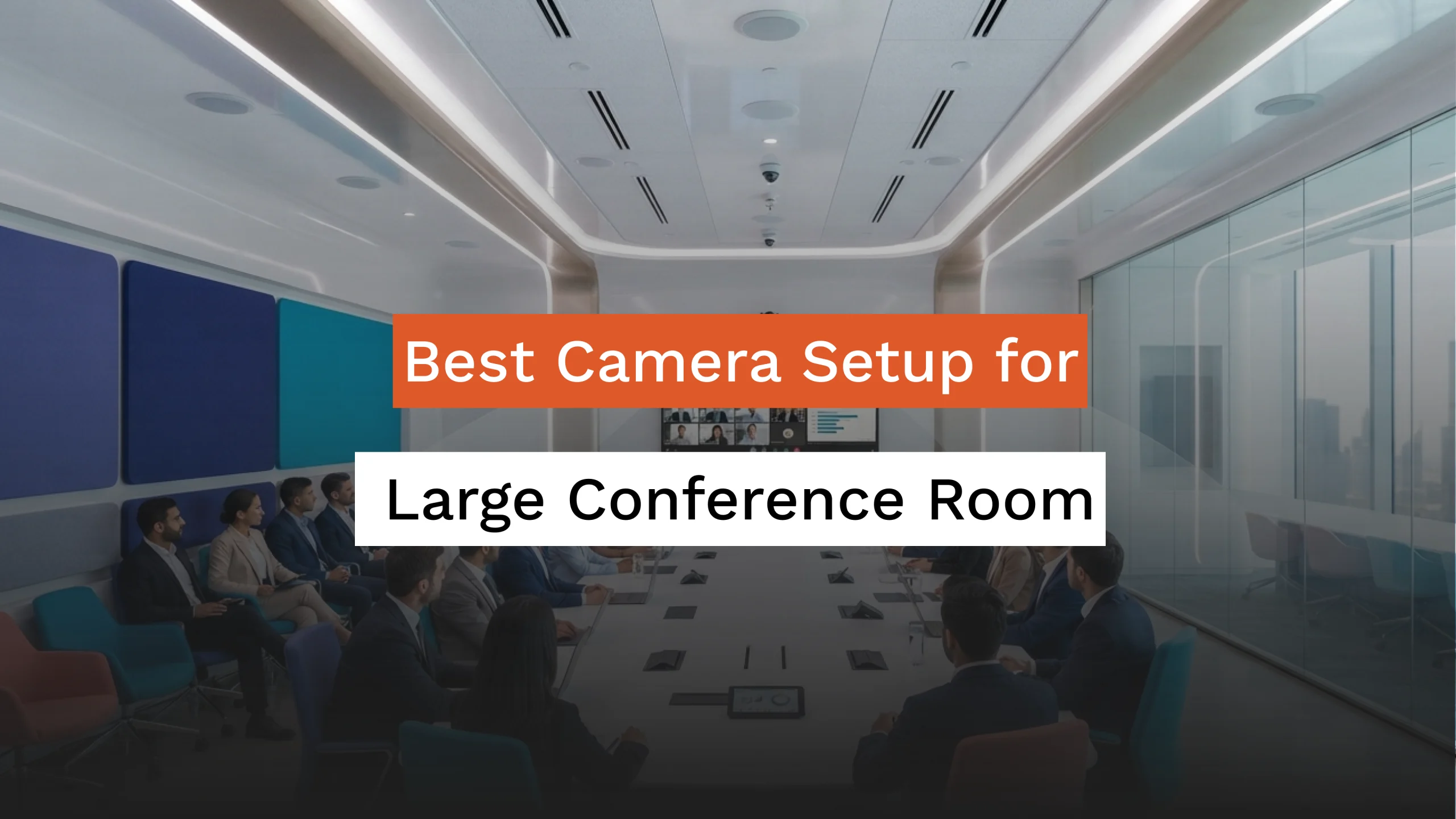
A meeting room that seats 20 to 40 people needs more than a basic webcam. Participants sitting at the back of the room should remain clearly visible, remote attendees should be able to identify who is speaking, and audio must stay consistent across the entire space.
Choosing the right video conferencing camera for large rooms is one of the biggest factors in achieving that. The camera, microphone system, room layout, and collaboration platform all work together to determine meeting quality.
This guide explains how to choose the right equipment, where to place cameras, when PTZ models make sense, and what businesses should consider before investing in a professional conference room solution.
Why does a large conference room need a dedicated camera?
A dedicated conference room camera provides wider coverage, better image quality, and intelligent tracking features that consumer webcams cannot match.
Large meeting spaces create challenges that smaller rooms do not. People may sit several metres away from the display, presenters often move around the room, and lighting conditions can vary from one side of the room to the other. A standard USB webcam usually has a fixed field of view and limited digital zoom, which means people at the back of the room appear small or lose detail.
Professional conferencing cameras are designed for these situations. Most enterprise models include:
- 4K image resolution
- Optical zoom for distant participants
- Wide-angle lenses
- AI auto framing
- Speaker tracking
- Low-light image enhancement
According to the International Telecommunication Union (ITU), video quality, camera positioning, and room acoustics all contribute to meeting effectiveness in collaborative environments.
What should you evaluate before buying a video conferencing camera for large rooms?
The room itself determines which camera will perform best.
Many organisations compare specifications without first evaluating the meeting space. Two rooms with the same seating capacity may require completely different camera setups because of differences in shape, lighting, or furniture arrangement.
Before selecting hardware, consider:
- Room dimensions
- Number of seats
- Table configuration
- Display location
- Natural lighting
- Ceiling height
- Microphone coverage
- Cable routing
- Network availability
For example, a long boardroom may benefit from a PTZ camera with optical zoom, while a wider room could require dual cameras to keep everyone visible.
Planning for future expansion is also worthwhile. Many organisations later add wireless presentation systems, interactive displays, room booking panels, or ceiling microphones. Selecting equipment that supports these additions can reduce future installation costs.
What features matter most in a conference room camera?
The best video conferencing camera for large rooms combines image quality with intelligent software features that automatically adapt to changing meeting conditions.
4K resolution
Higher resolution produces sharper images and allows moderate digital zoom without making faces appear blurry.
As 4K displays become more common in meeting spaces, using a matching camera helps maintain image clarity during presentations and video calls.
Optical zoom
Optical zoom enlarges distant participants without reducing image quality.
This becomes especially important in rooms that seat 30 or 40 people, where the camera may be positioned several metres from the far end of the table.
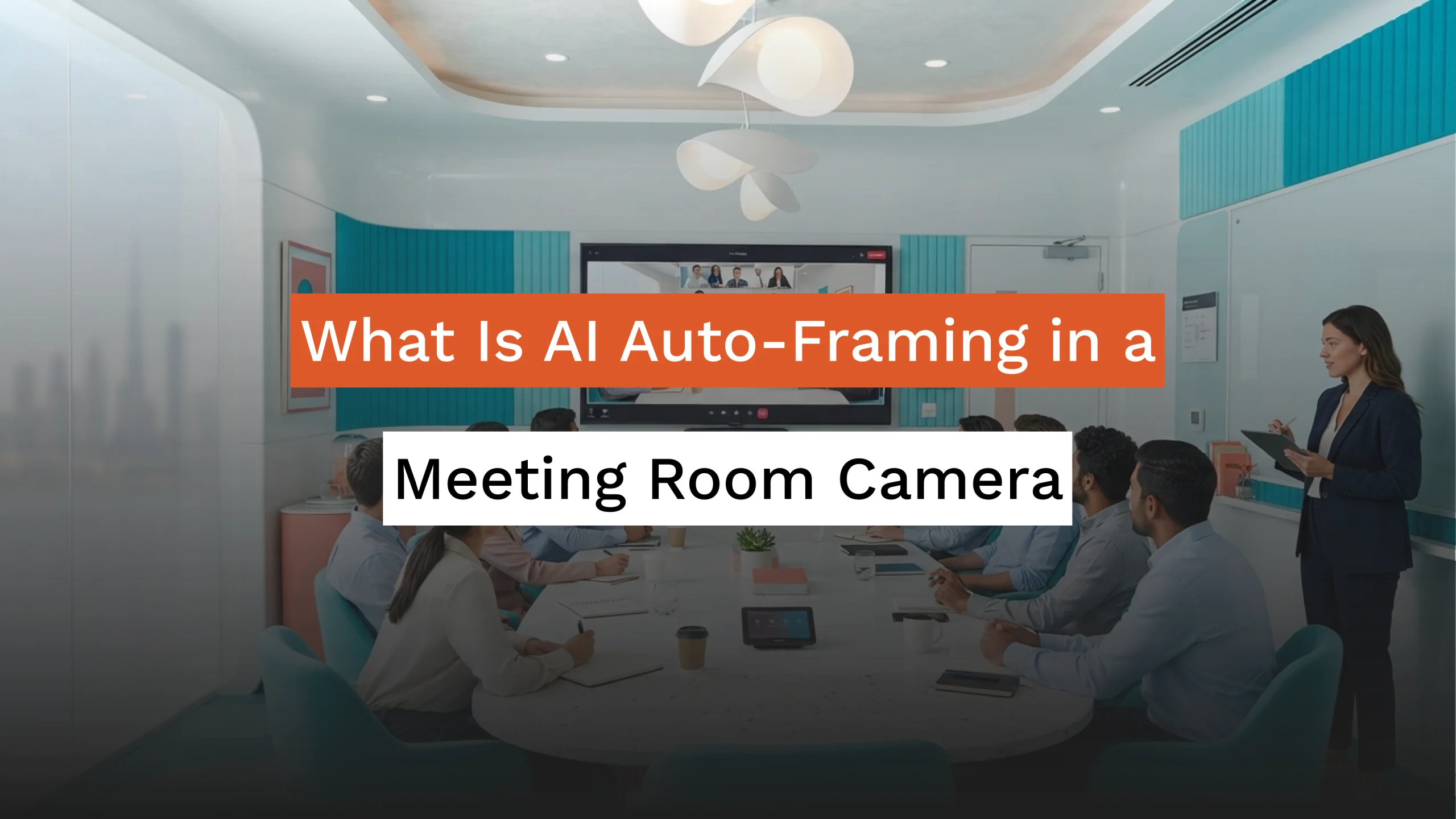
AI auto framing
AI framing automatically adjusts the viewing angle based on how many people are present.
Instead of showing empty chairs or unused sections of the room, the camera crops the image to keep participants centred.
Speaker tracking
Speaker tracking identifies the active speaker and smoothly adjusts the camera position as conversations move around the room.
This creates a more natural experience for remote attendees because they can immediately see who is speaking.
Low-light performance
Meeting rooms rarely have perfect lighting throughout the day.
Good low-light performance helps maintain accurate colours and facial detail without introducing excessive image noise.
Should you choose conference room cameras for Teams?
If your organization uses Microsoft Teams every day, choose conference room cameras for Teams that are officially Microsoft Teams Certified. Certified hardware is tested to work with Teams features, receives regular firmware support, and reduces compatibility issues during meetings.
Using certified devices also makes life easier for IT teams. Device management, software updates, and remote monitoring are built around the Teams ecosystem, helping reduce downtime and troubleshooting.
Some advantages of conference room cameras for Teams include:
- One-touch meeting join
- AI-powered participant framing
- Better integration with Teams Rooms
- Centralized device management
- Long-term software compatibility
If your meeting rooms also support Zoom or Google Meet, many enterprise cameras work across multiple platforms. Before purchasing, verify that the camera supports every conferencing platform your business uses.
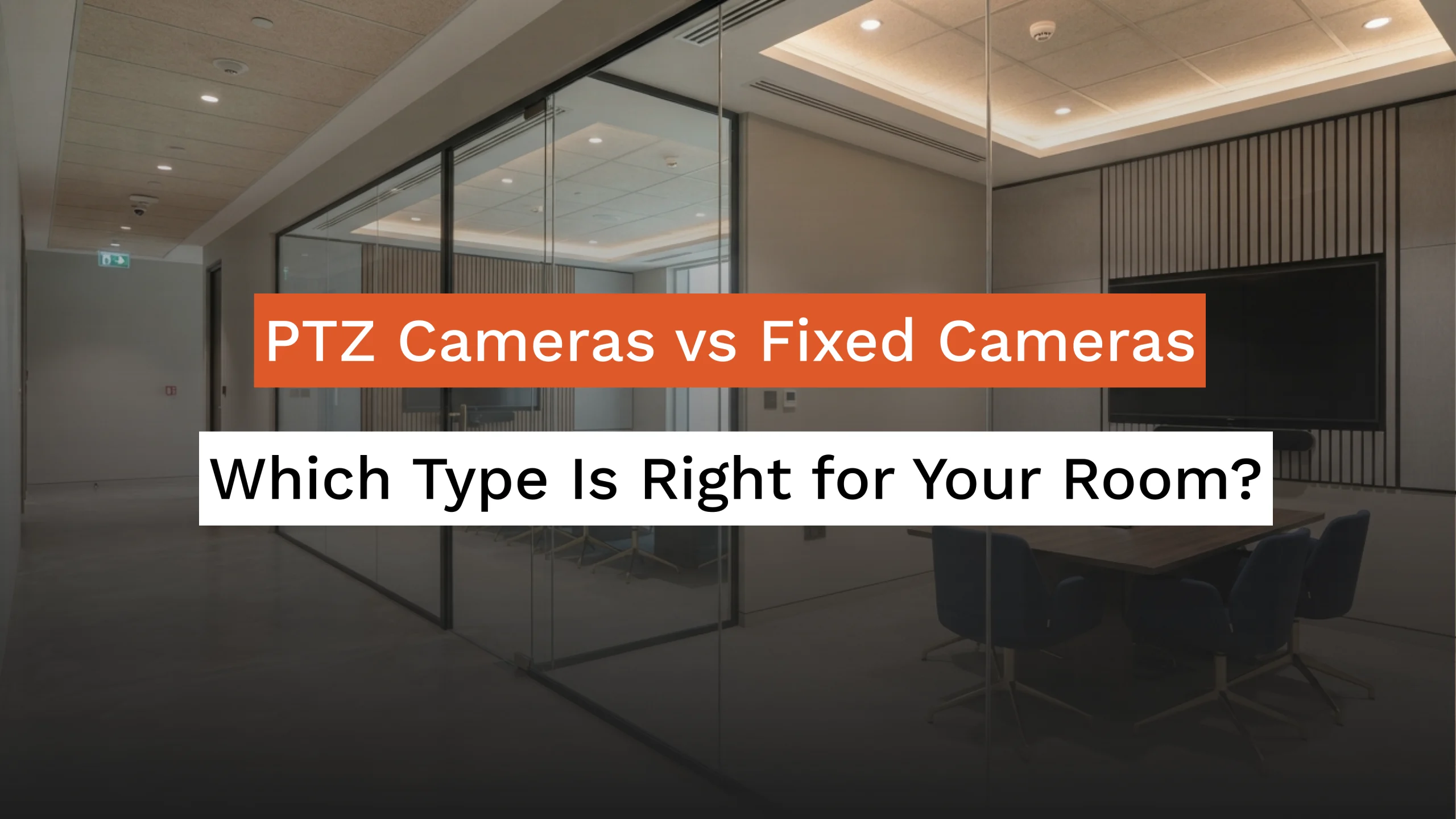
Are PTZ cameras better than fixed cameras for large conference rooms?
For most rooms seating 20 to 40 people, the answer is yes. A PTZ camera gives you more flexibility because it can pan, tilt, and zoom without sacrificing image quality.
A fixed camera works well in smaller meeting spaces where everyone sits within a single field of view. In a larger room, however, participants may sit too far apart or too far from the camera. This often results in faces appearing small, especially for remote attendees.
A PTZ camera solves this problem by adjusting its view to match the meeting.
PTZ cameras are particularly useful when:
- Presenters move around the room.
- Multiple people speak from different locations.
- Whiteboards need to be shown during meetings.
- Training sessions involve demonstrations.
- Executive boardrooms host formal presentations.
Many modern PTZ cameras also include AI speaker tracking, allowing the camera to automatically follow whoever is talking instead of requiring manual control.
If your room regularly hosts board meetings, training sessions, or presentations, a PTZ system is usually the better long-term investment.
Where should a conference room camera be installed?
Even the best conference room camera cannot perform well if it is installed in the wrong location.
For most boardrooms, the camera should be positioned directly above or below the main display. This creates a natural viewing angle and helps remote participants feel like everyone is making eye contact.
If the room is especially wide, one camera may not provide enough coverage. In these situations, businesses often install dual cameras or use a PTZ model that can cover different seating areas.
When positioning a camera, avoid:
- Installing it too close to the ceiling.
- Pointing it directly toward bright windows.
- Mounting it at an extreme angle.
- Blocking the view with displays or furniture.
The goal is simple. Every participant should remain visible without appearing distorted or too far away.
How does lighting affect video quality?
Lighting has a much bigger impact on video quality than many businesses expect.
Even a premium video conferencing camera for large rooms can produce poor results if participants are sitting with strong light behind them. Bright windows often create silhouettes, making faces difficult to see.
For the best results:
- Use consistent lighting across the room.
- Reduce direct sunlight where possible.
- Avoid spotlights aimed at participants.
- Keep the lighting balanced on both sides of the table.
Many enterprise cameras include HDR technology that helps manage difficult lighting conditions, but good room lighting still provides the best results.
Why is audio just as important as the camera?
Remote participants can usually tolerate average video quality for a short time. Poor audio is much harder to ignore.
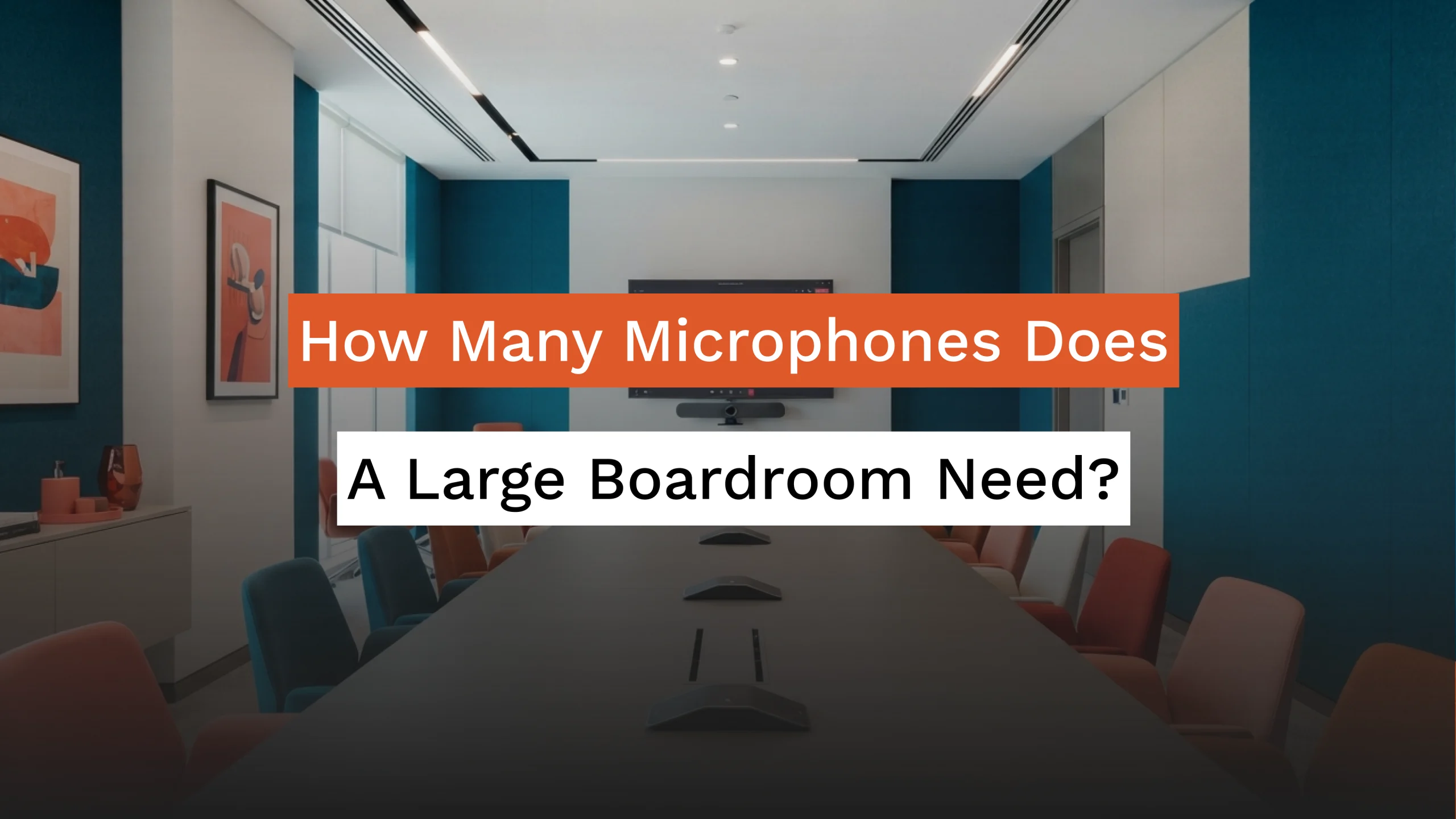
A professional conference room camera should always be paired with microphones designed for the room size. Otherwise, people sitting farther away may sound distant or difficult to understand.
For rooms accommodating 20 to 40 people, businesses commonly use:
- Ceiling microphone arrays
- Beamforming microphones
- Wireless tabletop microphones
- Digital signal processors (DSPs)
- Echo cancellation systems
These technologies help ensure every participant can be heard clearly, regardless of where they are seated.
Audio and video should be planned together rather than purchased separately. A great camera cannot compensate for poor microphone coverage.
What installation mistakes should businesses avoid?
Many conference room problems are caused during planning rather than after installation.
Common mistakes include choosing equipment based only on price, underestimating room acoustics, or ignoring future expansion needs.
Some of the most frequent issues include:
- Buying consumer webcams for enterprise meeting rooms.
- Installing cameras without considering seating layout.
- Using built-in laptop microphones for large meetings.
- Ignoring network bandwidth requirements.
- Choosing hardware that is not compatible with existing collaboration platforms.
Taking time to plan the complete meeting room before purchasing equipment usually delivers better results and helps avoid unnecessary replacement costs.
Is a webcam for large conference room meetings a practical choice?
A webcam for large conference room meetings can work well in some situations, but it depends on the size of the room and how the space is used.
Modern enterprise webcams offer features that were once limited to premium conferencing systems. Many now include 4K resolution, AI auto framing, HDR imaging, noise reduction, and USB plug-and-play connectivity. For rooms seating 8 to 15 people, these features are often enough to deliver a good meeting experience.
Once attendance grows beyond 20 people, the limitations become more noticeable. Fixed lenses, limited optical zoom, and narrower viewing angles can make participants at the far end of the room appear small or difficult to recognize.
A webcam for large conference room setups may still be suitable if:
- The room is relatively compact.
- Participants sit close together.
- Meetings are mostly internal discussions.
- Budget is a major consideration.
- The webcam supports AI framing and 4K video.
For larger boardrooms, training rooms, and executive meeting spaces, a dedicated conference room camera or PTZ system usually provides better coverage and greater flexibility.
Which smart technologies improve large conference rooms?
Wireless presentation systems
These systems allow participants to share content directly from their laptops, tablets, or mobile devices without connecting HDMI cables. Meetings start faster, and the table stays free from cable clutter.
Interactive displays
Interactive displays allow presenters to write, annotate, and edit documents during meetings. Changes can often be shared instantly with remote attendees, making collaboration more effective.
Digital room scheduling panels
Scheduling panels outside meeting rooms display availability and allow employees to book rooms without returning to their desks. This helps reduce double bookings and unused meeting spaces.
Ceiling microphone systems
Ceiling-mounted microphones free up table space while providing consistent voice pickup across the room. They are especially useful in larger conference rooms where participants sit farther apart.
Digital signal processors
A DSP manages audio by reducing echo, balancing microphone levels, and improving voice clarity. It helps create a more natural conversation for remote participants.
When these technologies are planned together, the meeting room becomes easier to use and requires less technical support during daily operations.
How Is AI Changing Conference Room Cameras?
Artificial intelligence is transforming conference room cameras from simple video devices into intelligent collaboration tools. Instead of relying on manual camera controls or fixed presets, AI-powered cameras can automatically detect participants, adjust the camera angle, optimize video quality, and respond to changes during a meeting in real time. This allows meetings to run more smoothly while ensuring that both in-room and remote participants have a clear, engaging view of the discussion without constant manual adjustments.
Today’s AI-enabled conference room cameras include several smart features that enhance the meeting experience, such as:
- Automatic participant framing – Keeps everyone in the meeting room properly visible by adjusting the camera framing as people enter or leave.
- Active speaker tracking – Automatically focuses on the person who is speaking, creating a more natural conversation for remote attendees.
- Face detection – Recognizes participants’ faces to improve framing accuracy and maintain clear visibility.
- Group framing – Adjusts the camera to include all participants in the room while maintaining an optimal viewing angle.
- Background noise reduction – Uses AI to minimize unwanted sounds, making voices clearer during video calls.
- Automatic image optimization – Continuously adjusts brightness, exposure, white balance, and focus to deliver the best possible video quality in different lighting conditions.
These intelligent features help remote participants stay focused on the conversation instead of being distracted by poor camera angles or manual adjustments. Beyond camera automation, many modern conferencing platforms also use AI to generate meeting summaries, create searchable transcripts, and provide meeting insights, making it easier for teams to review discussions and improve collaboration after the meeting has ended.
How can businesses future-proof their conference room investment?
Meeting room technology changes quickly, but careful planning can reduce the need for expensive upgrades.
Instead of choosing equipment based only on today’s requirements, consider how the room may be used over the next several years.
Questions worth asking include:
- Will the room host larger meetings in the future?
- Could additional displays be added later?
- Will the business expand to multiple meeting rooms?
- Does the hardware support firmware updates?
- Can the system integrate with different collaboration platforms?
Selecting equipment with flexible connectivity and software support usually provides better long-term value than replacing hardware every few years.
How does Oxford Integration help businesses design better meeting rooms?
Oxford Integration helps businesses design meeting rooms that match their space, seating capacity, and collaboration requirements. Instead of recommending a single product for every project, the focus is on creating a solution that fits the room and the way people actually work.
A typical deployment may include:
- A professional video conferencing camera for large rooms
- Enterprise audio systems
- Microsoft Teams or Zoom room integration
- Interactive displays
- Wireless presentation solutions
- Room scheduling systems
- Installation and system configuration
Selecting the right equipment is only one part of building an effective conference room. The layout, installation, audio design, and platform compatibility all influence how well the room performs.
Planning these technologies together helps reduce compatibility issues and creates a meeting room that is easier for employees to use every day.
Conclusion
The right video conferencing camera for large rooms depends on more than resolution or price. Room size, seating layout, audio coverage, camera placement, and collaboration software all influence the meeting experience. Businesses that regularly host 20 to 40 participants should choose equipment that provides clear video, reliable audio, and intelligent features such as auto framing and speaker tracking.
A professional conference room camera paired with the right microphones and displays helps remote participants stay engaged and reduces interruptions during meetings. If your organization relies on Microsoft Teams, selecting certified conference room cameras for Teams can simplify deployment and ongoing management.
If you are planning a new meeting room or upgrading an existing one, Oxford Integration can help assess your space, recommend suitable technologies, and design a conferencing solution that matches your business requirements. Rather than replacing equipment later, a well-planned meeting room gives you a system that supports both current and future collaboration needs.
Frequently Asked Questions
What is the best video conferencing camera for large rooms?
The best video conferencing camera for large rooms offers 4K resolution, optical zoom, AI auto framing, speaker tracking, and a wide field of view. These features help ensure every participant remains visible, even in conference rooms seating 20 to 40 people.
When should I choose a PTZ conference room camera?
A PTZ conference room camera is the better choice when presenters move around the room, participants are seated far from the display, or meetings involve whiteboards and presentations. Optical zoom and remote camera control provide greater flexibility than fixed cameras.
Are conference room cameras for Teams worth buying?
Yes. Conference room cameras for Teams are tested for compatibility with Microsoft Teams and support features such as intelligent framing, simplified device management, and regular firmware updates. They also help reduce setup and connectivity issues.
Can a webcam for large conference room meetings replace a PTZ camera?
A webcam for large conference room use can work well in medium-sized meeting spaces where participants sit relatively close together. For rooms with 20 to 40 attendees, dedicated conferencing cameras usually provide better coverage, optical zoom, and overall video quality.
What else should businesses consider besides the camera?
A successful meeting room also depends on microphone placement, lighting, display positioning, room acoustics, and network performance. Planning the entire conferencing environment produces better results than upgrading the camera alone.